The Reserve Bank of Australia’s shift to rate cuts in late 2025 and early 2026 has fundamentally changed Melbourne’s property landscape. For buyers who spent 2022-2024 battling interest rate rises, the RBA rate cuts Melbourne property buyers 2026 environment brings both opportunities and new challenges.
After helping 200+ families navigate property purchases across Melbourne’s northern suburbs over 7 years—through rate rises, plateaus, and now cuts—we’re seeing firsthand how these changes affect real buyers’ decisions, budgets, and competition levels.
This article breaks down exactly what the RBA rate cuts property Melbourne mean for your buying power, what’s happening in northern suburbs markets, and how to capitalize on opportunities while avoiding new traps these conditions create.
Whether you’re a first home buyer finally seeing affordability improve, an upgrader with more borrowing capacity, or an investor reassessing returns, understanding these dynamics helps you make smarter property decisions in 2026.
Understanding the RBA Rate Cut Cycle
What Actually Happened
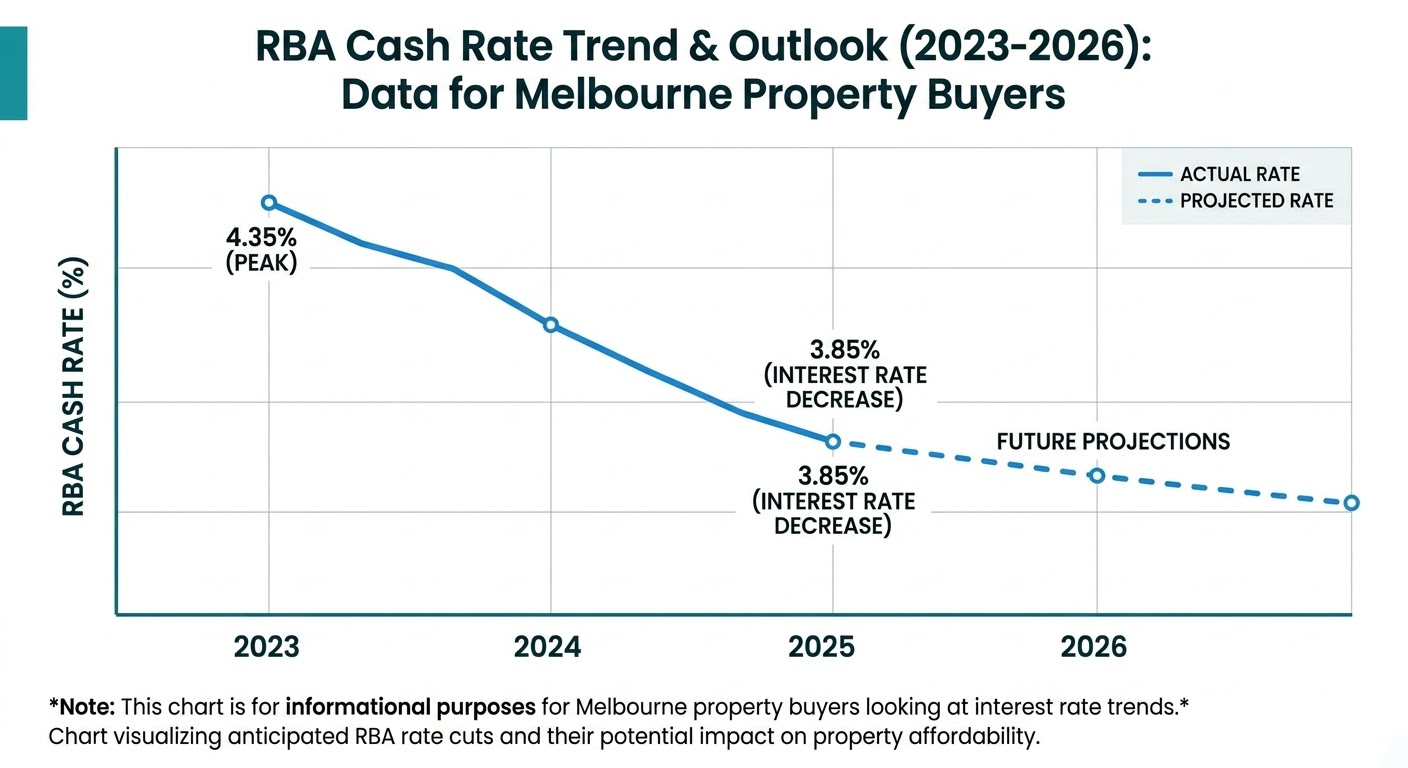
After holding rates at 4.35% through most of 2024, the RBA began cutting in November 2025:
November 2025: 0.25% cut (4.35% → 4.10%)
February 2026: 0.25% cut (4.10% → 3.85%)
Expected May 2026: Potential 0.25% cut (3.85% → 3.60%)
Total cuts so far: 0.50% with potentially 0.75% by mid-2026.
Why the RBA Cut Rates
Inflation Controlled: Inflation fell to 2.8% (within RBA’s 2-3% target range) after peaking at 7.8% in late 2022. Mission accomplished on price stability.
Economic Softening: GDP growth slowed to 1.8% (below trend). Consumer spending weakened. Retail and construction sectors struggling. RBA prioritized growth over inflation concerns.
Unemployment Creeping Up: Unemployment rose from 3.5% (2023) to 4.2% (early 2026). Labour market cooling prompted supportive monetary policy.
Global Context: US Federal Reserve and other central banks cut rates through 2025. Australia following global trend with local adjustments.
What This Means for Borrowers
Rate cuts flow through to lower mortgage repayments within 1-3 months as banks pass on RBA cuts (usually not 100%, but close).
Example Impact:
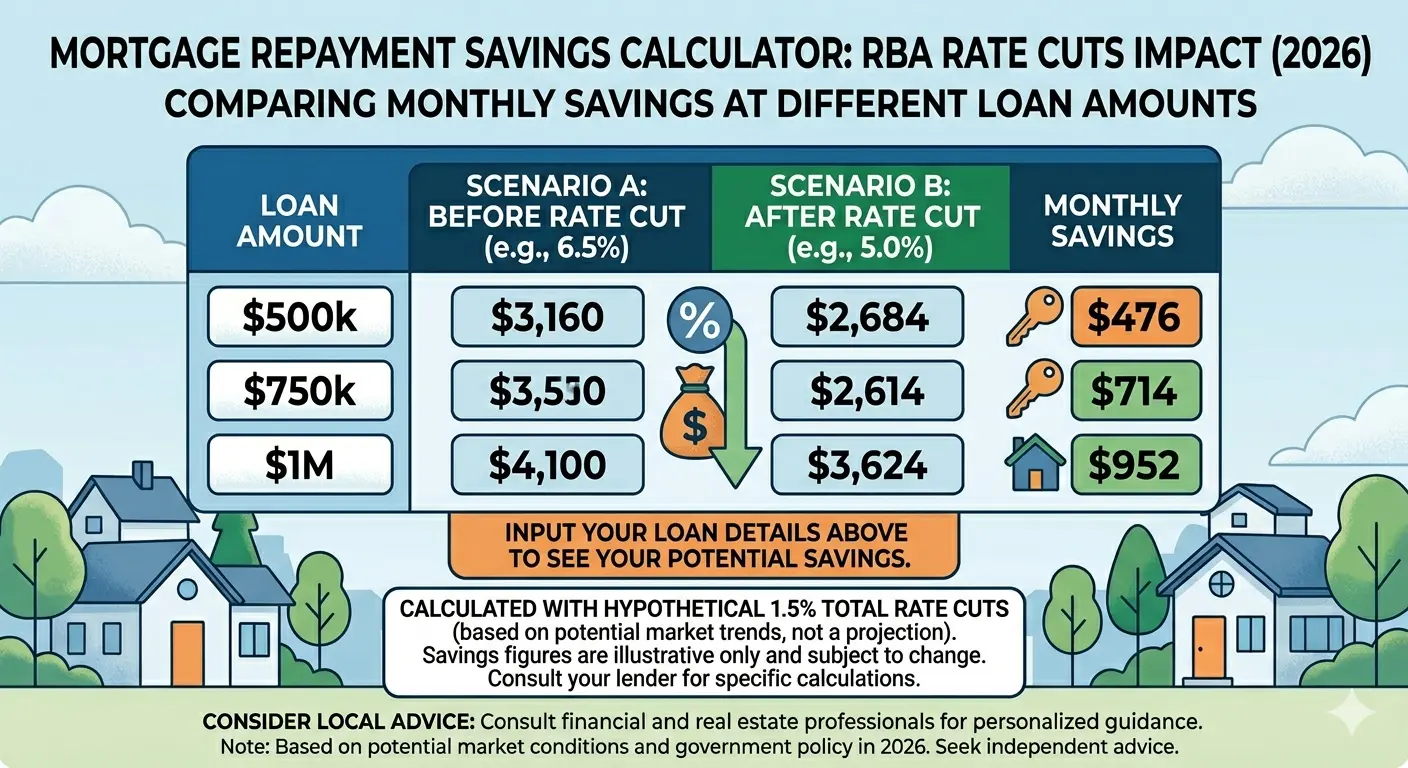
$600,000 loan at 6.5% (peak 2023): $3,792/month
$600,000 loan at 5.5% (current average 2026): $3,406/month
Monthly saving: $386 | Annual saving: $4,632
$800,000 loan at 6.5%: $5,056/month
$800,000 loan at 5.5%: $4,541/month
Monthly saving: $515 | Annual saving: $6,180
These savings are significant—equivalent to rate rises in reverse, putting hundreds monthly back in borrowers’ pockets.
How Rate Cuts Affect Buying Power
Increased Borrowing Capacity
Lower rates mean you can borrow more on the same income. Banks assess your ability to service loans at current rates plus buffers (typically 3% above actual rate).
Borrowing Power Comparison:
At 6.0% (2023 rates):
$100,000 household income: Borrow approximately $550,000-$580,000
At 5.0% (current 2026 rates):
$100,000 household income: Borrow approximately $610,000-$640,000
Increase: $60,000-$80,000 additional borrowing capacity
This expanded capacity lets first home buyers access better estates/packages, upgraders move to larger homes, and investors add properties to portfolios.
Budget Stretches Further
Not only can you borrow more, but lower rates mean more comfortable repayments even at higher loan amounts.
Scenario: First home buyer with $100,000 combined income.
2023 (6.5% rates): Borrowed $550,000 comfortably within 30% income-to-debt ratio. Repayments: $3,476/month.
2026 (5.5% rates): Can borrow $620,000 and still have lower repayments: $3,516/month. Or borrow same $550,000 with much lower repayments: $3,122/month (saving $354/month).
This flexibility means better properties within budget or more financial breathing room with same property.
What’s Happening in Melbourne’s Northern Suburbs
Immediate Market Response
Rate cuts triggered immediate activity increases across Craigieburn, Mernda, Epping, and Doreen:
- Auction Clearance Rates: Jumped from 62-65% (late 2024) to 72-76% (early 2026). More properties selling, stronger competition.
- Days on Market: Decreased from 35-42 days average to 28-35 days. Properties selling faster as buyer confidence returns.
- Enquiry Levels: Estate agents reporting 30-40% increase in buyer enquiries January-March 2026 versus same period 2025.
- Open Home Attendance: Multiple buyers attending inspections again. Some properties seeing 15-20+ groups versus 5-10 in 2024.
Price Stabilization and Growth
After modest declines or stagnation 2023-2024, northern suburbs prices stabilizing and showing early growth:
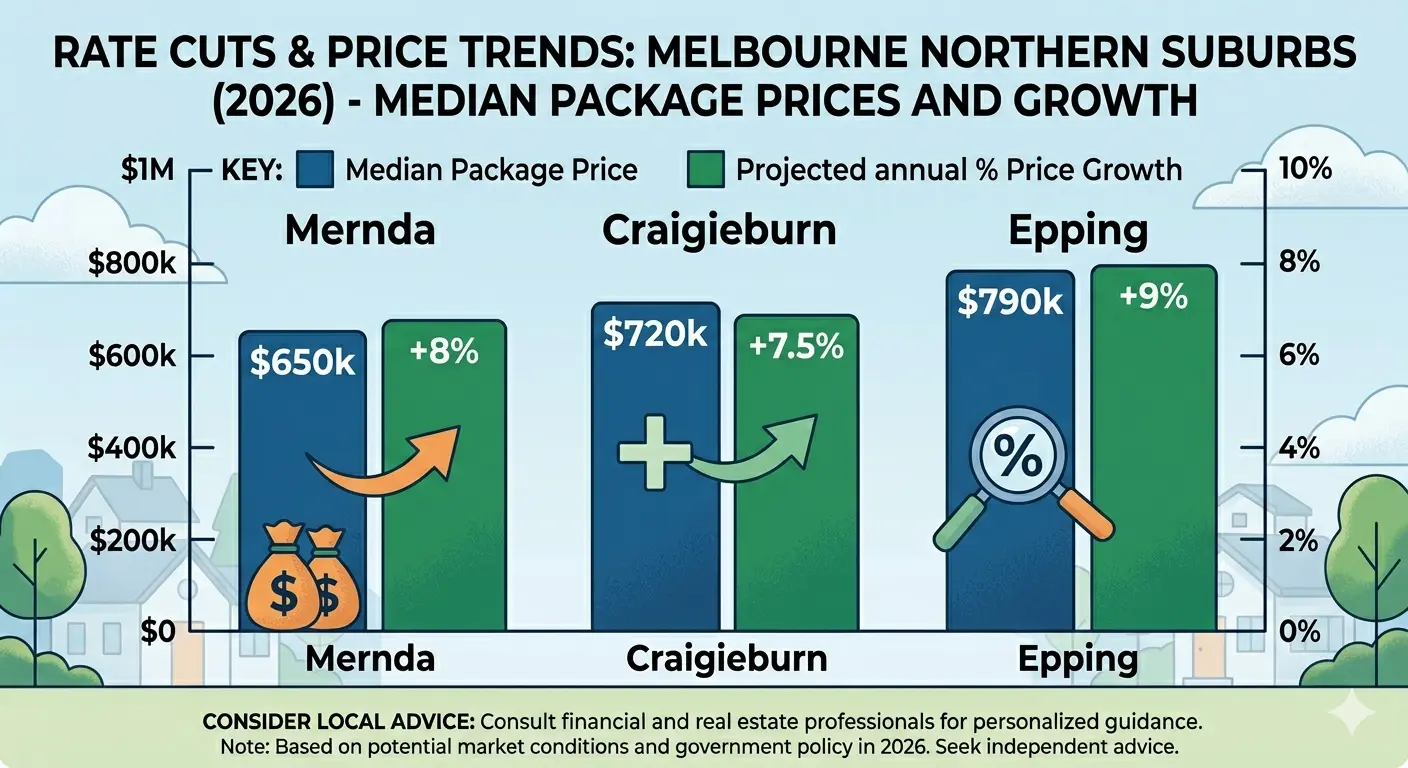
- Craigieburn: Median packages $680,000-$780,000 (up 2-3% from mid-2025 lows). Established homes showing 3-4% growth quarter-on-quarter.
- Mernda: Median packages $650,000-$850,000 (up 4-5% driven by train line appeal). Riverwalk Estate particularly strong with 6-7% growth.
- Epping: Median packages $700,000-$950,000 (up 3-4%). Aurora maintaining premium with consistent demand.
- Doreen: Median packages $720,000-$880,000 (up 2-3%). Established stock appreciating as buyers recognize value.
Rate cuts aren’t creating boom conditions (yet), but they’ve arrested declines and initiated moderate, sustainable growth.
Competition Returning
The biggest change buyers notice: more competition for quality properties.
- 2024 (high rates): Buyers had time to inspect multiple properties, negotiate extensively, request vendor concessions. Sellers accepted lower offers.
- 2026 (falling rates): Good properties receiving multiple offers quickly. Buyers need pre-approval ready, faster decision-making, competitive offers. Less negotiating leverage.
This shift favors prepared buyers who’ve done research, secured finance, and can move decisively when right property appears.
First Home Buyers: The Big Winners
Affordability Improving Meaningfully
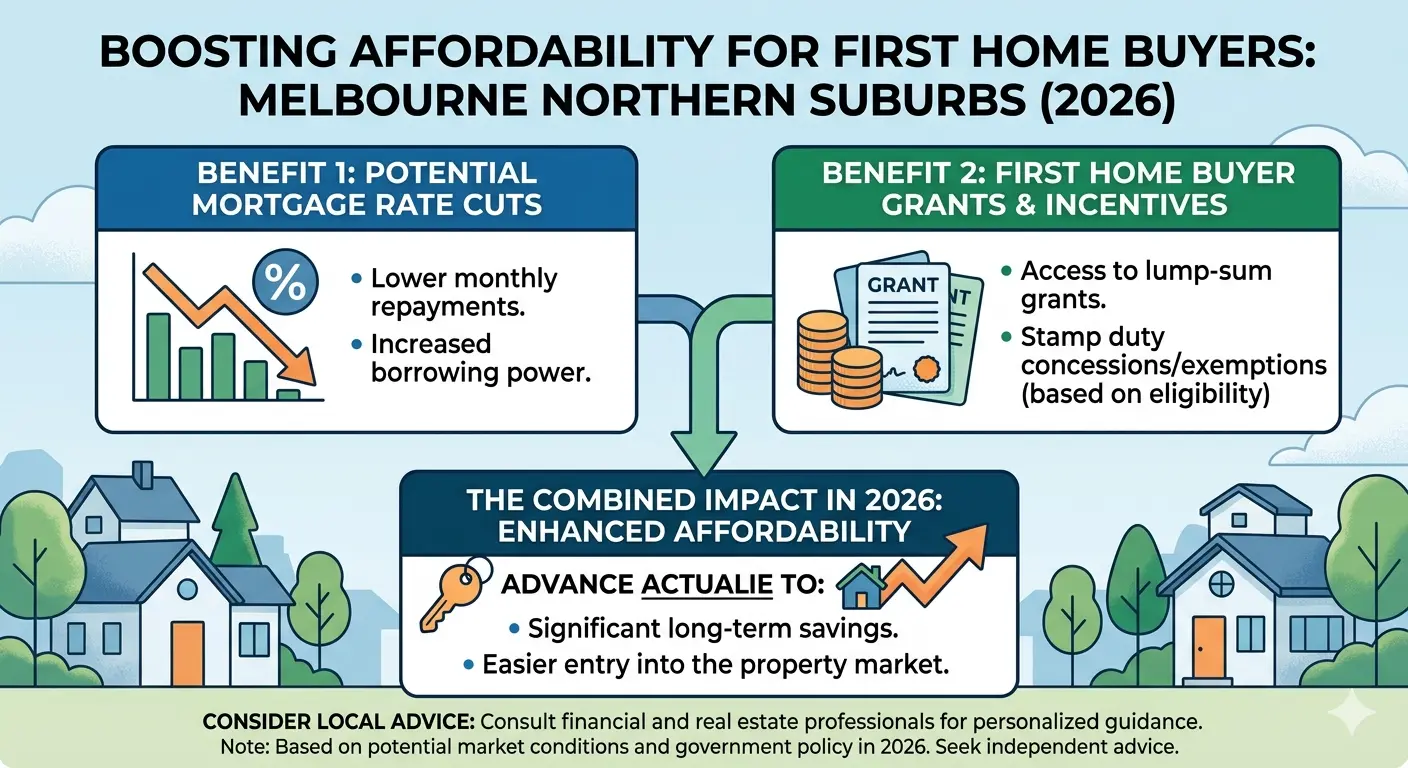
Rate cuts combined with grants make homeownership more accessible:
Scenario: First home buyer couple, $100,000 combined income, 5% deposit saved ($35,000).
At Peak Rates (2023):
- Borrow: $550,000 + $35,000 deposit = $585,000 property budget
- Repayments at 6.5%: $3,476/month (stressful on $100K income)
- Access: Entry-level packages only (Plenty Valley, Cambridge)
At Current Rates (2026):
- Borrow: $620,000 + $35,000 deposit = $655,000 property budget
- Repayments at 5.5%: $3,516/month (manageable)
- Access: Mid-range packages (Mernda Villages, Harvest Home, Highlands)
Improvement: $70,000 higher budget accessing better estates while maintaining similar repayments. Game-changer for young buyers.
Grant Stacking Maximizes Benefits
Smart first home buyers in 2026 combine rate cut benefits with existing grants:
Grant Package:
- First Home Owner Grant: $10,000
- Stamp Duty Exemption: $17,500-$31,000 (depending on land value)
- First Home Guarantee Scheme: 5% deposit (saves $15,000-$25,000 LMI)
- Total grants/savings: $42,500-$66,000
Rate Cut Benefit:
- Additional $60,000-$80,000 borrowing capacity
- Lower ongoing repayments versus 2023
Combined, these benefits represent $100,000+ in improved affordability—transformational for generation locked out of market during rate rise period.
Strategic Entry Points
Rate cuts create optimal first home buyer entry across northern suburbs:
Best Value (Under $680,000):
- Plenty Valley (Mernda): $600,000-$680,000
- Cambridge Estate (Epping): $650,000-$750,000
- Highlands (Craigieburn): $660,000-$760,000
Balanced Quality ($680,000-$780,000):
- Mernda Villages: $680,000-$760,000
- Harvest Home (Epping): $700,000-$780,000
- Aston (Craigieburn): $690,000-$770,000
Premium Entry ($780,000-$880,000):
- Riverwalk (Mernda): $780,000-$880,000
- Atherstone (Craigieburn): $780,000-$860,000
Rate cuts make premium entry accessible to dual-income first home buyers previously limited to entry-level estates.
Upgraders and Investors: Renewed Opportunities
Upgraders Gaining Equity and Capacity
Homeowners who purchased 2018-2021 seeing equity gains as markets stabilize, combined with increased borrowing capacity from rate cuts.
Example: Family bought Craigieburn home 2020 for $580,000. Current value: $640,000. Equity: $60,000+ (plus loan principal paid down).
Upgrade Scenario:
- Sell $640,000 home, retain $100,000+ after costs
- Borrow $650,000 at current 5.5% rates (versus struggling to borrow $550,000 at 6.5% in 2023)
- Purchase $750,000 Riverwalk or Aurora package
- Repayments: $3,690/month (manageable with equity gains and income growth since 2020)
Rate cuts make upgrade dreams viable again after 2-3 years of being “stuck” in starter homes.
Investors Reassessing Returns
Lower rates improve interest rates property market investment equations:
Yield Calculation Improvement:
2023 (6.5% rates): $650,000 Mernda property. Rent $580/week ($30,160/year). Loan cost at 6.5%: $35,000/year. Negative cashflow: -$4,840/year
2026 (5.5% rates): Same $650,000 property. Rent $610/week (4% growth) = $31,720/year. Loan cost at 5.5%: $29,500/year. Positive cashflow: +$2,220/year
Rate cuts turn marginal investments into cashflow-positive or neutral, improving investor appetite.
Capital Growth Resumption: Stabilizing prices plus rate cut momentum = investors returning to market for growth plays. Northern suburbs offering 5-8% projected annual growth 2026-2027 attractive again.
The Risks: What Could Go Wrong
Competition Intensifying Too Quickly
Rate cuts bringing buyers off sidelines simultaneously. Risk of competitive pressure driving prices beyond sustainable levels, especially for sought-after estates/packages.
Warning Signs:
- Packages selling before hitting market
- Buyers waiving contract conditions to secure properties
- Prices jumping 5-10% within 3-6 months
Smart buyers stick to pre-determined budgets even amid competition. Overpaying today creates problems tomorrow if rates rise again or market corrects.
Rate Cut Cycle May Pause or Reverse
While further cuts expected mid-2026, RBA could pause if:
- Inflation rebounds above 3%
- Housing prices surge too quickly (creating affordability concerns)
- Australian dollar weakens significantly (importing inflation)
Scenario: You buy at current rates expecting further cuts. Rates instead hold or rise. Your repayment buffer gets tested.
Protection: Borrow conservatively. Ensure you can service loan if rates increase 1-2% from current levels. Don’t maximize borrowing capacity assuming further cuts.
Builders Still Facing Challenges
Rate cuts don’t solve builder capacity constraints, material costs, or labor shortages affecting construction timelines.
Reality Check: Even with improved affordability, build times remain 8-11 months (versus 6-8 months pre-COVID). Some builders still financially stressed. Quality concerns persist when overcommitted.
Buyer Protection: Rigorous builder vetting more critical than ever. Rate cuts shouldn’t rush you into signing with unsuitable builders just because finance is easier.
Expert Advice: How to Navigate This Market
For First Home Buyers
- Move Decisively But Carefully: Rate cuts create opportunity window, but don’t panic buy. Research thoroughly, get pre-approval, understand grants, then act decisively when right property appears.
- Maximize Grants: Ensure you’re accessing every available dollar: FHOG, stamp duty exemption, FHGS. Combined with rate cut benefits, grants make ownership achievable.
- Choose Quality Over Size: Better to buy smaller in Riverwalk or Aurora than larger in fringe estate. Quality locations appreciate better long-term.
- Budget Conservatively: Borrow below maximum capacity. Rates could rise again. Maintain repayment buffer protecting against uncertainty.
For Upgraders
- Strike While Equity Strong: Markets stabilizing creates optimal upgrade window. Equity gains plus borrowing capacity increases make moves viable.
- Sell Before Buying or Conditional Offers: Don’t overcommit financially. Ensure current home sold or make upgrade purchase conditional on sale.
- Prioritize Long-Term Needs: If upgrading, make it count. Choose home you’ll stay in 10+ years rather than incremental moves every 3-5 years.
For Investors
- Focus on Fundamentals: Don’t chase yield alone. Prioritize capital growth areas (Mernda, Aurora) with strong infrastructure and population growth.
- Cashflow Test: Ensure property is cashflow neutral or positive at current rates. Don’t rely on further rate cuts to make numbers work.
- Diversification Over Concentration: If building portfolio, spread across suburbs rather than concentrating in single estate.
Find Out How Rate Cuts Affect Your Property Budget — Call LT Property
Navigating buy property 2026 decisions amid rate cuts requires local expertise, builder knowledge, and independent advice protecting your interests.
At LT Property Solution Group, we help buyers understand exactly how rate changes affect their specific situations—calculating genuine borrowing capacity, identifying optimal estates/packages, and negotiating best terms in this competitive environment.
How We Help with Rate Cut Opportunities:
- Budget Analysis: We calculate your true borrowing capacity at current rates, factor in grants, and determine realistic property budgets accounting for all costs.
- Estate Selection: We identify suburbs and estates offering best value in current market conditions—where rate cut benefits translate to quality, not just inflated prices.
- Builder Vetting: We ensure builders are financially stable and capable of delivering, preventing situations where you secure great finance but problematic builder.
- Timing Guidance: We advise whether to buy now or wait for further cuts based on your specific circumstances and market conditions.
- Negotiation Support: We leverage our experience to negotiate best pricing and terms even in competitive markets, maximizing your rate cut advantage.
Get Expert Guidance on Buying in the Rate Cut Environment:
📞 Call: 0402 067 455
Discuss how rate cuts affect your specific buying plans.
📅 Book Rate Cut Strategy Session
60-minute consultation analyzing your budget, capacity, and optimal buying approach.
📧 Email: [email protected]
Send your questions about buying in current market conditions.
💰 Free Budget Calculator
Download our calculator showing borrowing capacity at different rate scenarios.
Office: 78D Hume Highway, Somerton VIC 3062
Mon-Fri: 9am-5pm | Sat: 9am-1pm